-

12
Mar
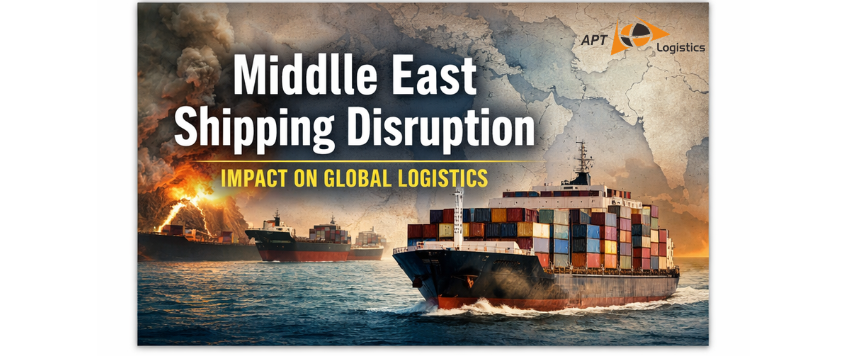
Middle East Shipping Disruption Impact on Global Logistics
Middle East Shipping Disruption Impact on Global Logistics
The ongoing geopolitical tensions in the Middle East are beginning to affect global logistics and supply chains. Shipping companies, freight forwarders, and international traders are closely monitoring the situation as the Middle East shipping disruption starts influencing global freight movement.
One of the most critical areas affected is the Strait of Hormuz, a key maritime passage that connects the Persian Gulf with international shipping routes.
Why the Strait of Hormuz Is Critical for Logistics
The Strait of Hormuz plays a vital role in global trade. Nearly 20% of the world’s oil shipments pass through this narrow waterway each day. Any instability in this region can immediately impact global shipping operations.
Due to the current tensions, many shipping companies are taking precautionary measures such as:
- Rerouting vessels away from high-risk zones
- Increasing maritime security measures
- Adjusting shipping schedules
- Monitoring port and transit risks
- These steps are contributing to the growing Middle East shipping disruption, which affects trade lanes across Asia, Europe, and the Americas.
Rising Freight Costs and Fuel Prices
One of the most immediate consequences of geopolitical conflicts is the rise in global oil prices. Higher fuel prices directly impact transportation and logistics costs.
For the shipping industry, this results in:
- Increased bunker fuel costs
- Higher ocean freight rates
- Additional fuel surcharges
- Rising inland transport costs
Businesses involved in global trade may experience fluctuating freight rates and longer shipping times as carriers adjust their operations.
Impact on Air Cargo Routes
Air cargo operations are also experiencing changes. Some airlines have adjusted flight paths due to regional airspace restrictions and safety considerations.
These adjustments may lead to:
- Longer flight routes
- Increased operational costs
- Slight delays in cargo delivery schedules
For industries that rely on time-sensitive shipments, such as pharmaceuticals or electronics, these changes can impact supply chain efficiency.
Pressure on Major Regional Logistics Hubs
Major logistics hubs in the Middle East, including ports and transshipment centers, are essential for global cargo movement. Any disruption in nearby trade corridors can influence container availability and vessel schedules.
Shipping companies are currently reviewing their service routes and adapting operations to reduce risk and maintain cargo flow.
Managing Supply Chain Risks During Disruptions
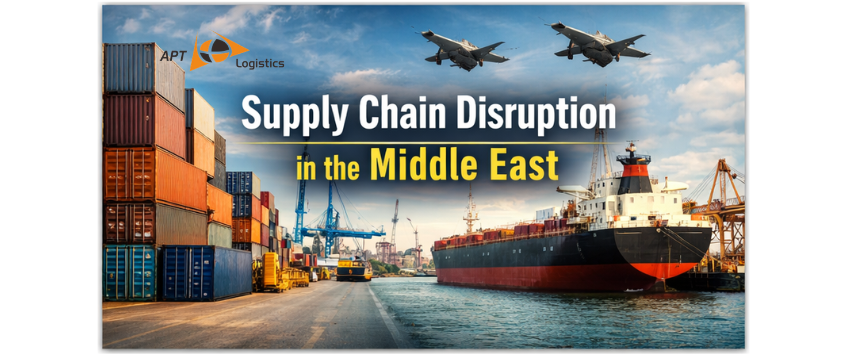
Rising geopolitical tensions are impacting port operations and supply chain stability across the Middle East region.
In times of geopolitical uncertainty, businesses must strengthen their supply chain strategies. Companies can reduce risk by:
- Diversifying shipping routes
- Planning flexible logistics strategies
- Using multimodal transportation solutions
- Partnering with experienced freight forwarders
A proactive logistics strategy can help minimize the impact of unexpected disruptions.
How APT Logistics Supports Businesses
During global logistics disruptions, working with a reliable freight partner becomes crucial. APT Logistics actively monitors international trade developments and adjusts logistics strategies to support customers.
APT Logistics provides:
- Flexible routing solutions
- Multimodal transport services
- Real-time shipment tracking
- Strategic logistics planning
By leveraging global networks and industry expertise, APT Logistics helps businesses maintain efficient supply chains even during complex geopolitical situations.
Conclusion
The current Middle East shipping disruption demonstrates how geopolitical tensions can quickly impact global logistics and supply chains. From rising fuel prices to shipping route adjustments, the effects are already being felt across international trade.
Businesses that stay informed and partner with experienced logistics providers will be better positioned to navigate these disruptions and maintain supply chain stability.
APT Logistics continues to support global trade by providing reliable and adaptable logistics solutions during challenging times.
Need Help? Chat with us!
Start a Conversation
Hi! Click one of our members below to chat on WhatsApp