-

07
Apr
LCL vs FCL Cost Comparison | Which Shipping Option is Cheaper?
LCL vs FCL Cost Comparison
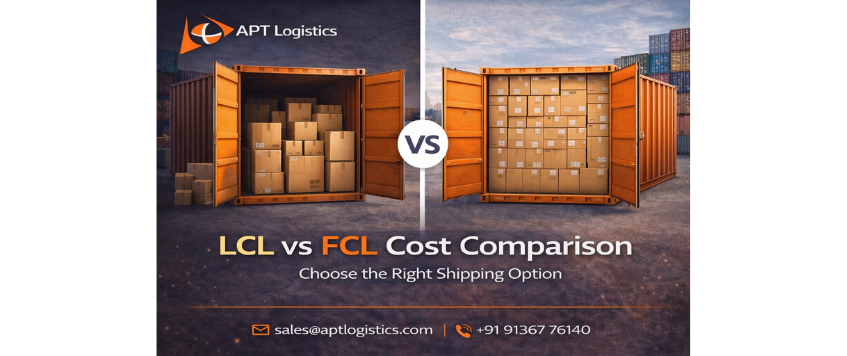
When shipping cargo internationally, one of the most important decisions is choosing between LCL (Less than Container Load) and FCL (Full Container Load). Understanding the LCL vs FCL cost comparison helps businesses select the most cost-effective and efficient shipping method.
Each option has its own pricing structure, advantages, and ideal use cases.
What is LCL Shipping?
LCL (Less than Container Load) is used when your shipment does not fill an entire container. Multiple shipments from different exporters are consolidated into one container.
Cost Structure of LCL:
- Charged per CBM (cubic meter)
- Minimum charge may apply
- Includes consolidation and handling charges
When LCL is Cost-Effective:
- Small shipments
- Low cargo volume
- Flexible shipping frequency
However, LCL may include additional costs such as handling and consolidation fees.
What is FCL Shipping?
FCL (Full Container Load) means booking an entire container for your cargo, regardless of how much space is used.
Cost Structure of FCL:
- Fixed rate per container (20ft / 40ft)
- Lower cost per unit for large volumes
- Fewer handling charges
When FCL is Cost-Effective:
- Large shipments
- High-volume cargo
- Sensitive or fragile goods
FCL is generally more economical when cargo volume is high.
LCL vs FCL Cost Comparison
Factor LCL Shipping FCL Shipping Pricing Method Per CBM Per container Best For Small shipments Large shipments Cost Efficiency Higher per unit Lower per unit Handling Charges More Less Transit Risk Slightly higher Lower
Key Cost Differences Explained
1. Volume of Cargo 📦
LCL is cheaper for small shipments, while FCL becomes more economical as volume increases.
2. Handling and Consolidation
LCL involves multiple handling points, which increases costs. FCL reduces handling since cargo stays in one container.
3. Transit Time and Risk
LCL shipments may take longer due to consolidation and deconsolidation. FCL shipments are faster and safer.
4. Break-Even Point 💡
In many cases, when shipment volume exceeds 10–15 CBM, FCL becomes more cost-effective than LCL.
APT Logistics helps businesses determine the ideal shipping option based on cargo volume and budget.
How APT Logistics Helps You Save Costs
APT Logistics provides expert guidance in choosing between LCL and FCL by offering:
- Competitive freight rates
- Cost analysis and optimization
- Reliable consolidation services
- Efficient container booking
- End-to-end logistics support
With industry expertise, APT Logistics ensures you get the best value for your shipments.
Conclusion
Understanding the LCL vs FCL cost comparison is essential for making smart shipping decisions. While LCL is ideal for smaller shipments, FCL offers better cost efficiency for larger volumes.
By partnering with APT Logistics, businesses can optimize freight costs and ensure smooth international shipping operations.
Need Help? Chat with us!
Start a Conversation
Hi! Click one of our members below to chat on WhatsApp