-

05
Mar
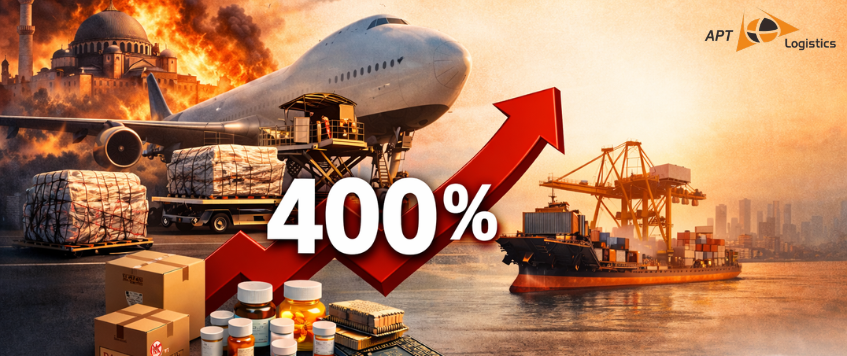
Air Freight Spot Rates Jump Up to 400% as West Asia Crisis Hits India’s Pharma and Tech Export Supply Chain
The global logistics sector is witnessing a major disruption as air freight spot rates soar up to 400% following the escalating West Asia conflict. The geopolitical crisis has significantly impacted global supply chains, particularly affecting India’s pharma and technology exports, which rely heavily on air cargo connectivity through Gulf hubs.
With airspace restrictions, airport shutdowns, and rerouted flights, exporters are facing rising costs and delayed shipments, putting pressure on time-sensitive cargo sectors such as pharmaceuticals, electronics, and high-value technology components.
Why Air Freight Spot Rates Are Rising
The sharp rise in air freight spot rates is largely driven by disruptions in major aviation corridors across West Asia. Several airlines have suspended or rerouted flights due to security concerns and restricted airspace in the region.
These changes have reduced cargo capacity and increased transit times, forcing exporters to rely on alternative routes that are both longer and more expensive. As a result, air freight spot rates from India have surged dramatically, in some cases rising by as much as 400% compared to normal market levels.
Logistics providers are also dealing with war-risk insurance premiums, higher fuel costs, and operational disruptions, which further contribute to the surge in air freight pricing.
Impact on India’s Pharma and Tech Exports
The pharmaceutical and technology sectors are among the most affected by the spike in air freight spot rates. These industries depend heavily on reliable and fast air cargo services to move high-value and temperature-sensitive shipments.
Pharmaceutical exports, including vaccines, APIs, and medical products, require strict delivery timelines and controlled environments. Delays caused by disrupted air routes can compromise supply chains and increase logistics costs for manufacturers.
Similarly, India’s technology exporters rely on air freight to transport semiconductors, electronic components, and precision equipment to global markets. The surge in air freight spot rates is therefore creating significant financial and operational challenges for exporters.
Gulf Hubs and Global Cargo Routes Under Pressure
West Asia plays a critical role in global logistics networks. Major cargo hubs in the Gulf serve as transshipment points for shipments moving between Asia, Europe, and Africa.
With the ongoing West Asia conflict, several airports and air corridors have experienced operational disruptions. Flight cancellations and rerouting have created bottlenecks across global cargo networks, affecting both air freight and maritime supply chains.
The Middle East is also a major trading partner for India, making the disruption particularly significant for exporters relying on these routes.
Exporters Face Delays and Rising Costs
As air freight spot rates continue to rise, exporters across India are facing multiple operational challenges:
- Higher logistics costs due to reduced cargo capacity
- Delayed shipments caused by rerouted flights
- Limited availability of freighter aircraft
- Increased insurance and operational risks
Industry bodies have also urged authorities to consider relief measures such as waiving demurrage charges and facilitating smoother cargo movement to reduce financial pressure on exporters.
What This Means for Global Logistics
The sudden surge in air freight spot rates highlights the vulnerability of global supply chains to geopolitical tensions. As conflicts disrupt key trade corridors, logistics providers and exporters must adapt quickly to shifting routes and rising costs.
Experts believe that if the West Asia conflict continues, the logistics industry may see prolonged volatility in air cargo pricing and capacity constraints. Businesses involved in India’s pharma and tech exports may need to diversify shipping routes, secure long-term freight contracts, and strengthen supply chain resilience.
Conclusion
The ongoing West Asia conflict has triggered a major disruption in the global air cargo industry, causing air freight spot rates to soar up to 400%. For India’s exporters—particularly in the pharma and technology sectors—the crisis is creating significant challenges in cost management, cargo movement, and delivery timelines.
As geopolitical tensions reshape global trade routes, the logistics sector will need to remain agile and innovative to maintain the smooth flow of international cargo.
Need Help? Chat with us!
Start a Conversation
Hi! Click one of our members below to chat on WhatsApp