-

17
Sep
Blank Sailing Impact Shipping: How It Affects Freight Rates
How Blank Sailings Affect Global Freight Rates
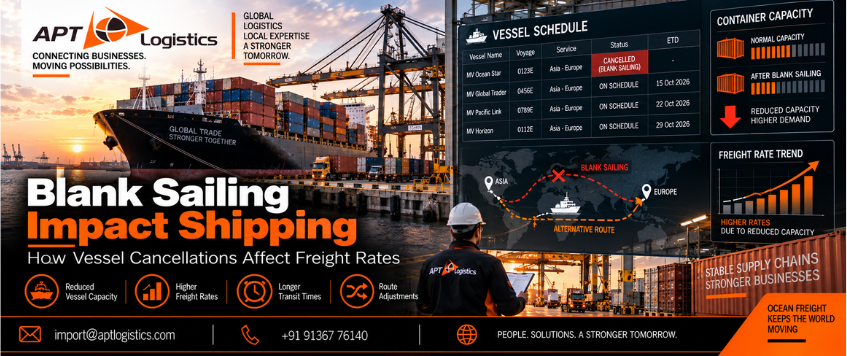
Ocean freight schedules are planned weeks or months in advance, but shipping lines sometimes cancel a scheduled vessel sailing or remove a port call. This practice is known as a blank sailing.
Understanding the blank sailing impact shipping can help importers and exporters plan bookings, inventory and freight budgets more effectively.
What Is a Blank Sailing?
A blank sailing occurs when a shipping line cancels a scheduled voyage or skips one or more planned port calls.
For example, if a vessel was scheduled to sail from an Asian port to Europe but the sailing is cancelled, cargo booked for that service may need to move on another vessel.
Blank sailings can be introduced for several operational or commercial reasons, including changes in demand, network adjustments, port congestion or vessel schedule management.
1. Reduced Available Capacity
When a sailing is cancelled, the number of available vessel slots on that trade lane temporarily decreases.
If cargo demand remains strong, reduced capacity can put upward pressure on freight rates.
This is one of the most important aspects of the blank sailing impact shipping has on international freight costs.
2. Freight Rates Can Increase
With fewer available slots, carriers may adjust their pricing depending on market conditions.
Importers and exporters may therefore encounter:
- Higher base ocean freight
- Peak season or market-related surcharges
- Limited space availability
- Higher rates for alternative sailings
The actual impact varies according to the trade lane, timing, demand and available capacity.
3. Cargo May Be Rolled to Another Sailing
When a scheduled sailing is cancelled, booked cargo may be transferred to a later vessel or another available service.
This can result in:
Blank Sailing → Booking Rolled → New Vessel → Revised ETA
The additional waiting period can affect production and delivery schedules.
4. Transit Times Can Change
A blank sailing may create a longer transit time if the replacement vessel departs several days later.
Additional transshipment or a different routing can also change the original estimated arrival date.
5. Equipment Availability May Be Affected
Changes in vessel schedules can influence the positioning of empty containers.
Depending on the trade lane, exporters may experience difficulty obtaining the required container type or equipment within the original booking window.
How Businesses Can Reduce the Impact
Businesses cannot prevent shipping lines from cancelling a sailing, but they can prepare for schedule changes.
Practical Steps
- Book cargo early when space is expected to be tight.
- Monitor carrier schedules before cargo readiness.
- Keep alternative sailing options available.
- Allow reasonable buffer time for important deliveries.
- Compare carrier and routing options when disruptions occur.
- Maintain communication with your freight forwarder for schedule updates.
How APT Logistics Helps
APT Logistics monitors carrier schedules and coordinates with shipping line partners to help customers manage changes in vessel movements.
When a sailing is cancelled, our team can evaluate available alternatives based on space, routing, transit time and freight cost.
This helps importers and exporters make timely decisions instead of waiting until the original sailing date has passed.
Conclusion
The blank sailing impact shipping can extend beyond a cancelled vessel. Reduced capacity may influence freight rates, equipment availability, booking schedules and delivery timelines.
For businesses involved in international trade, proactive schedule monitoring and alternative routing options can help reduce the operational impact of blank sailings.
APT Logistics supports businesses with ocean freight planning, carrier coordination and end-to-end shipment management across international trade lanes.
Need Help? Chat with us!
Start a Conversation
Hi! Click one of our members below to chat on WhatsApp