-

21
Feb
The APT Logistics Guide to Incoterms: Reducing Risk and Maximizing Profit in International Trade
What ar
e Incoterms?Established by the International Chamber of Commerce (ICC), Incoterms (International Commercial Terms) define the responsibilities of buyers and sellers in the shipping process. They dictate who pays for freight, who handles insurance, and most importantly, at what exact point the risk transfers from the seller to the buyer.
Group E: The “Pick Up” Term
-
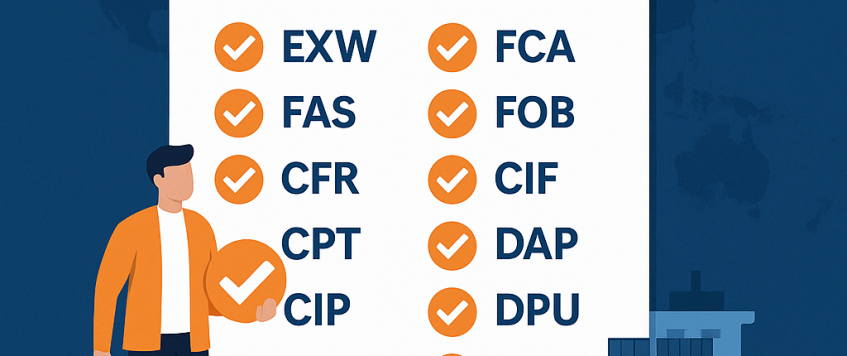
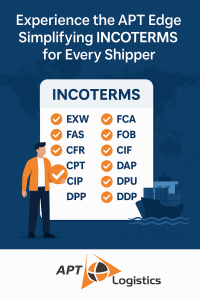
EXW (Ex Works): The seller’s only responsibility is to make the goods available at their warehouse. The buyer handles everything else, including loading and export clearance. High risk for the buyer.
Group F: Main Carriage Unpaid
-
FCA (Free Carrier): The seller delivers the goods to a carrier named by the buyer. Risk transfers once the carrier receives the goods.
-
FAS (Free Alongside Ship): Used for sea freight. The seller places goods alongside the vessel at the port.
-
FOB (Free On Board): The classic maritime term. The seller is responsible until the goods are safely loaded “on board” the ship.
Group C: Main Carriage Paid
-
CFR (Cost and Freight): The seller pays to get the goods to the destination port, but the risk transfers to the buyer the moment the goods are on the ship.
-
CIF (Cost, Insurance, and Freight): Same as CFR, but the seller must provide insurance.
-
CPT (Carriage Paid To): The seller pays for transport to a named place, but risk transfers to the buyer once the goods are handed to the first carrier.
-
CIP (Carriage and Insurance Paid To): Similar to CPT, but includes mandatory high-level insurance coverage.
Group D: The “Arrival” Terms
-
DAP (Delivered at Place): Seller bears all risks and costs to bring the goods to a specific location (but not unloaded).
-
DPU (Delivered at Place Unloaded): The seller is responsible for delivery and unloading the goods at the destination.
-
DDP (Delivered Duty Paid): The “Gold Standard” for buyers. The seller handles everything: shipping, insurance, and import duties/taxes.
Quick Comparison Table
Term Mode of Transport Who Pays Main Freight? Risk Transfers at… EXW Any Buyer Seller’s Door FOB Sea Buyer On the Vessel CIF Sea Seller On the Vessel DDP Any Seller Buyer’s Door
Why This Matters for Your Bottom Line
Choosing the wrong term can lead to unexpected costs at the border or uninsured losses at sea. At APT Logistics, we recommend selecting a term that balances your control over the cargo with your appetite for risk.
Pro Tip: If you are new to importing, DAP or FCA are often safer starting points than trying to manage an EXW shipment from a foreign factory.
-
 e Incoterms?
Need Help? Chat with us!
Start a Conversation
Hi! Click one of our members below to chat on WhatsApp